Wednesday, June 29, 2022

Government Needs More Jon Snows

I.

I've written so much about Yuval Levin's institution take that I considered making a drinking game. Pick a random blog post of mine, if it mentions something about formative or performative institutions, or David Foster Wallace's commencement speech, take a drink. 

The weird thing is that I can't fully explain why I like Levin's idea so much. His criticism of performative institutions I get; it totally confirms my priors. But his praise of formative institutions is totally foreign to me. As I once wrote

"the truth is I have been formed by nothing. I dropped out of Cub Scouts. I lost my faith in religion. I've never been affiliated with a political party. My alma mater is not a part of my identity. Like many people in my generation, I resent the notion that I need some institution to transform me, that I need help in any way."

I think I was drawn to Levin's idea of formation because I was seeking an antidote to the performativeness that we agree on. But I don't buy the "we enter this world fallen" Judeo-Christian narrative. If you really squint hard you could say that it's kinda like my belief that we have a default setting that we choose to fight against, but I still feel like I'm talking about something different. So I'm seeking a better solution for the moral character I look for in leadership.

II.

In Game of Thrones, Jon Snow, who was raised in nobility, decides to join the Night's Watch. It's a huge commitment: he can never never leave, it's freezing cold, he takes a vow of celibacy, and it's either dangerous or pointless (depending on whom you ask). It's thankless grunt work. But it carries a sense of honor. You are doing the tough but necessary work that no one else wants to do.

Unfortunately, Jon gets to the wall and discovers that the Night's Watch is mostly thieves who are serving there as an alternative to prison or capital punishment. Very few people have joined for the honor.

I think this is a good metaphor for government employees and elected officials.

I think fewer people are drawn by the honor of public service and most want to use it as a platform for shaping society in the way they want it. 

So if performative people seek office as a platform for their views, formative people seek office as a way to shape their character, then Jon Snow seeks office as a way of carrying a burden of service. The third way is the only one I find interesting.

III.

I don't want to serve on my town's school committee, but maybe that's why I should. It pre-selects for performative activists who are seeking the position so they can transform our schools into a Kendi-style antiracist community or so they can ban any book that talks about racism. Do I owe it to all the normie people who just want normal things within the Overton Window?

Labeling someone performative almost feels like calling them selfish. Yet, it seems an oxymoron to call a performative activist selfish; they’re not out there for themselves. But they seem so different than the civil rights activists.

I think the difference is that during the progressive era, people fought for beliefs and ideas; equality, freedom, and dignity. The types of social justice or anti CRT activists I'm talking about are not called by a sense of duty or civic responsibility. No, they are fighting for people. A very specific set of people with specific identities. 

And that's fine, it's just not for me.

IV.

Lately I've been having conversations with members of the early boomer/late silent generation. They loved getting involved on boards and committees because they believed in service and volunteering, whether it was in service of an idea or a community. But that service had a secondary effect as a signaling device. It served as a good signal of character; outside people knew that someone who does this much volunteering is probably a good person.

But it’s become anti-inductive; everyone began doing it for the signal aspect and suddenly its no longer a signal. Now it's just a way for people to influence institutions, network, build their resume, and promote themselves.

Balaji Srinivasan said people wanted a God-fearing man in power because a "powerful leader who actually believed that eternal damnation was the punishment for violating religious edicts could be relied upon by the public even if no human could see whether he had misbehaved."

In that sense, the reason to lament the death of formative institutions is that they used to serve as a good proxy for using this heuristic. If someone completed Boy Scouts, I still assume they have good moral character because it isn’t easy and there isn’t much of an external benefit. But there are fewer institutions that signal to me, “this person will do the right thing when no one is looking.” Instead, they signal “this person will vote for these policies,” or "this person is trying to make their resume stand out."

V.

I want to fight for universal ideas because no one else seems to be doing so. And I think ideas are more important than individuals.

When Massachusetts was being attacked by the British, George Washington pledged to bring soldiers to their assistance. John Adams thanked him for his generosity, to which Washington replied, "Not generosity, duty." That line of thinking is more interesting to me than identity-based motivations.


Friday, June 24, 2022

My Back: A Day in the Life

I'm not this old, but I feel this old.

 I.

My day starts with pain.


I wake up and can already feel the tightness in my lower back, the stiffness in my joints, the aching arthritis pulsating through my spine. The pain varies depending on what position I was in when I fell asleep, but it’s always there waiting for me, as dependable as a crowing rooster in the morning.


Like any human with responsibilities, my next move is to sit up, which involves activating all the joints and muscles that already hurt.


I can do some stretches that feel good in the moment, but nothing seems to lessen the pain overall.


II.


There are little things that most people, people without chronic back pain, never think about that bother me.


For example, walking into work I notice that my shoelaces have come untied. A normal person would bend over to tie them but that hurts too much. So I just keep walking until I can find a place to sit down.


People, in their good intentions, love to point out when your shoelaces are untied. I don’t like having to explain that the arthritis in my back, coupled with my scoliosis, makes bending over difficult, so I usually just smile and say something like “Thank you,” as I continue walking.


I grab my cup from my office and head to the water cooler. At 6’4”, I’m a tall dude. The cooler’s spigot, however, is designed for normal-sized people. It comes up to my thigh. So to fill my cup, I have to sort of half bend over while operating the spigot. This can be more painful than bending over to tie my shoes, but this is how I get my water.


III.


My lunch break starts. I can go to the gym and lift some weights, which sometimes feels great and sometimes pulls a muscle in my lower back and I have to miss work for three days.


Today I go for a walk. I’m so fortunate to have this beautiful campus all around me. There is something about being outdoors, in nature, that I find so relaxing. I see a hawk's nest way up in a towering pine tree. I see squirrels running up a giant oak tree. I can hear birds chirping. The wind whipping across my face is odorless and yet somehow smells familiar. It smells like spring, like baseball games, like family reunions at a park, like youth.


I get back to my office refreshed, energized. But being on my feet for that long means that my back hurts. I have ibuprofen in my desk, but I have to weigh the tradeoff of pain now versus liver damage later. 


I choose pain now and disregard the ibuprofen.


IV.


I get home, exhausted. My youngest wants me to pick her up but I don’t have the stamina. Back pain isn’t just about the pain, it’s about the way it saps your energy. 


I’m tired. All. Of. The. Time. 


But I also hate using that as an excuse. So I bend down, grunt, and pick her up. For a moment, I’m happy. We both are.


I flop down on my couch, which is comfortable. But that just means it will be that much harder to get up.


As is inevitable, one of my four kids does something that makes one of the other three kids cry. I yell because I don’t want to get up to separate them.


Yelling doesn’t work.


I still don’t want to get up so I yell louder. Now another kid is crying because I yelled too loud so now I have to get up to comfort him. I’m angry because my back hurts, I’m resentful because my kids made me get up, I’m disappointed in myself for making my kid cry, and I’m despondent because I can’t find a way out of this.


V.


My wife cooks us a marvelous dinner. I feed some mush to the twins in their high chair, which means I have to lean forward in my chair to get in Feeding Position, which means the pain meter in my back is cranked up by the time I’m done feeding them.


After dinner, I begin to do the dishes. Being on my feet isn’t so bad, but sinks, much like water coolers, are designed for normal-sized people. So I’m bending over for 20 straight minutes and now I'm staring at the medicine cabinet and once again weighing the tradeoff of pain now versus liver damage later.


After the dishes are done I look outside the window into our backyard. During this time of year, the sun sets just after dinner. The weather is perfect. We only get a handful of days per year like this. I want to walk my dog so I can bask in this perfection, clear my mind, and watch a beautiful sunset over the mountains behind my house.


But that means putting off helping out with bedtime and further aggravating my back during the walk. So instead I help put the kids to bed, lay down on an ice pack, and watch TV until it’s time for bed so I can wake up tomorrow and do it all over again.


Friday, May 20, 2022

Updating My Priors: Short Takes 5/2022

Regarding my post about patents as a sign of innovation (scroll to the bottom); I am now less confident that it's a good signal at all.

So the increase in patents might not be a sign of our independent, innovative society but just a sign of big business using government power to crush competition. 


Regarding my purple dots post, the Transparency Effect is another way of framing it.

I've been thinking about my post "The Diffusion of Rhetoric." I said that for persuasion to be effective, you need a simple message for the uneducated, normie, persuadable crowd, and a message that won't ignite the activist, opposition crowd. This has been on my mind with the recent Roe v. Wade controversy. I see many from the pro choice crowd posting the arguments that they find convincing, but they're never gonna work on changing the mind of pro-lifers. 

But I've updated my view. Rather than worry about messaging that will ignite the pro-life activist crowd (at this point, they couldn't possible be more engaged in this war), I think the better strategy might be to do what the pro choice people are doing. How you word the poll can have an effect on responses regarding abortion, but the one thing that seems clear is that most people don't want Roe v. Wade overturned. 

So if Republicans are doing something that is unpopular, you should make it a salient topic if you want to them to lose the next election. Keep talking about it. Keep the unpopular thing on people's minds. And keep reminding them that it is Republicans who are doing the unpopular thing (I'm very bearish on the takes that "gay rights and interracial marriage are next on the chopping block" and worry this will lose credibility among The Persuadeables).

As of this writing, the GOP's unfavorability rating is at 58%. Let's see if it dips. (Update, since the first draft of this post it has dipped to 57%.)


I normally find WhErE iS tHe OuTrAgE? whataboutism to be loathsome, but sometimes I just lean into my own hypocrisy. I love how everyone was pointing out that the richest people in the world made tons of cash when the pandemic tanked the economy, which was really just a way of saying the stock market performed well and the people who had the most money in the stock market made the most money. 

And now that the stock market is in the tank, guess who is hurting the most? The billionaires.  


Another victory for us both-sidesist folks pushing our civility porn! Yeah!

Friday, May 13, 2022

Principles are consistent. People are not.


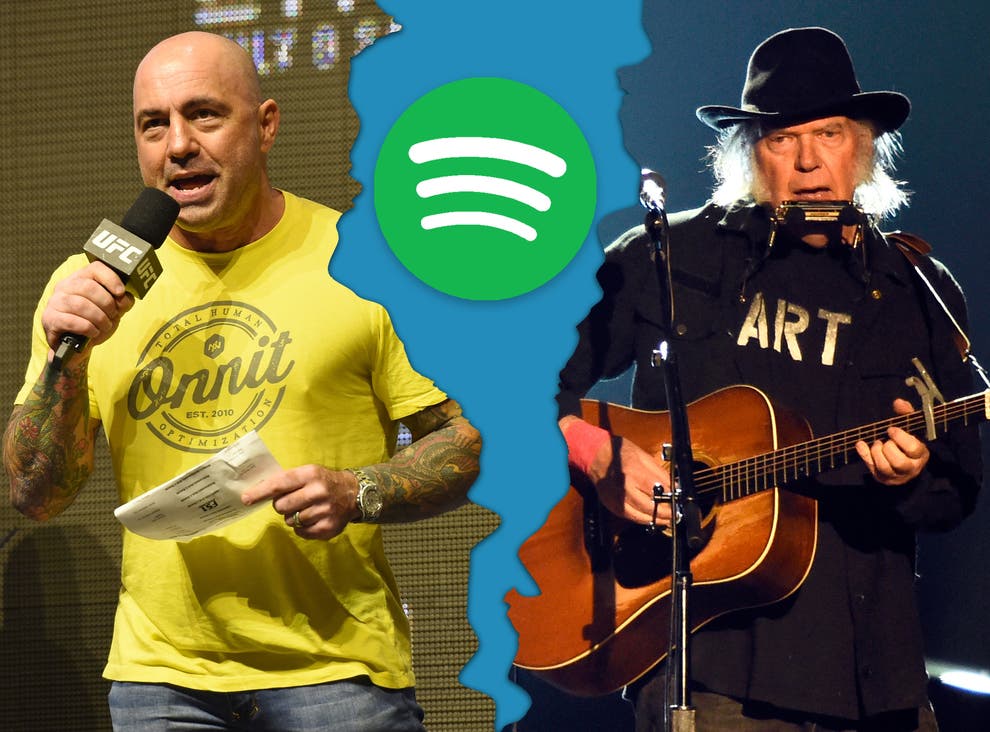
(Getty/iStock/Spotify)

I.

Throughout the whole Joe Rogan/Spotify imbroglio,  I’ve seen people I admire defending bad arguments. 

When the anti Rogan people shifted their campaign from charges of misinformation to charges of racism, the defenders of free speech began shifting to defend Rogan's comments and try to give those charges more context or explain away "what he was really saying."

It was funny to me because I felt that 1. Rogan should not be censured, and 2. I didn't need to defend anything he said. Maybe he did say something racist once upon a time. Maybe he said shitty things. Maybe he's a shitty person. That doesn't change my belief about freedom of speech (As a utilitarian, I also believe censuring/canceling him would have a net negative effect on misinformation).

And yet, I saw people twisting themselves into knots to defend Rogan's reputation, even people who weren't huge fans of his show. The same thing happened in 2020 when BLM supporters began defending rioters and looters and the people burning down police departments. You don't have to do this? It's okay to admit when the people on your side fuck up.

What I came to realize is that there is often a tendency to conflate thinkers and their ideas. So because Rogan is anti-institutions and challenges the intelligence community's narrative, people who share that view feel the need to defend all of his actions, even if they don't align with the ideas they're defending to begin with.

And I get it. Our default setting is to defend those in our ingroup, to find people who espouse the ideas we believe in and defend them. But people are much more flawed than universal principles, and you’ll end up defending the person when they conflict with the principle.

It's like my favorite version of the galaxy brain meme, specifically the second frame:


Most critiques of the Enlightenment don't critique the ideas themselves, but focus on the flaws on some of the thinkers. Just like criticism of our constitution is often cast on the fact that most of our founders owned slaves rather than focusing on the actual ideas of the document.

I hate it when judges try to interpret the Constitution by trying to decide on the Founders' intentions. The progressives' accusation that many of the Founders were racist is valid. (Where progressives go wrong is using this as an argument for tearing up the constitution and starting a new one from scratch.) The better view is to try to interpret the Constitution based on the Enlightenment ideals that informed the thinking of the Founders, which would suggest that universal individual rights should be granted to all people regardless of color. 

II.

Ross Douthat examined this tension with clarity and precision: how do we parse honorable acts from possibly dishonorable people?

"our monuments and honorifics exist primarily to honor deeds, not to issue canonizations — to express gratitude for some specific act, to acknowledge some specific debt, to trace a line back to some worthwhile inheritance."

So if your university is named after a racist, you should think of the name as honoring the gift to establish the university, not honoring its namesake.

And how do we think about the founders; the good, the bad, and the ugly?

"Thus when you enter their Washington, D.C., memorials, you’ll see Thomas Jefferson honored as the man who expressed the founding’s highest ideals and Abraham Lincoln as the president who made good on their promise. That the first was a hypocrite slave owner and the second a pragmatist who had to be pushed into liberating the slaves is certainly relevant to our assessment of their characters. But they remain the author of the Declaration of Independence and the savior of the union, and you can’t embrace either legacy, the union or “we hold these truths …” without acknowledging that these gifts came down through them."

The job of the rationalist thinker is to commit to universal principles and apply them even when they force you to criticize those you love. Even when they force you to admit that the worst person you know just made a good point.

Friday, May 6, 2022

Intergenerational Patterns

In the novel White Noise, two characters go to visit a barn advertised as the most photographed barn in America. While there, among dozens of other tourists snapping their cameras, they realized how they've become a part of a spectacle.

"'Being here is a kind of spiritual surrender. We see only what the others see. The thousands who were here in the past, those who will come in the future. We've agreed to be part of a collective perception. This literally colors our vision. A religious experience in a way, like all tourism.'"

Driving to Boston recently, I realized how much I associate this trip with going to Red Sox games, despite the fact that I haven’t been to a game since my kids were born. My dad took me and my brother every summer when we were kids, often enough that the majority of the times in my life that I traveled on this highway have been during trips to watch the Red Sox play.

I began to think about how my grandfather took my dad and his brother, as well, when they were kids. It made me sad that I’ve never continued this tradition and taken my son. But why should I even care?

As my wife and I walked through the city, I was not only connected to the memories of walking these same streets as a youth, following the crowd to Fenway Park under the bright Citco sign, but also the idea that my dad and his dad walked these very same streets years before I was born. 

My grandfather’s parents were Irish immigrants, much like the founding and current culture of Boston, right down to the local professional basketball team’s logo. Fenway Park is over 100 years old, so there is a century-worth of Irish Americans who sat in those seats, cheering for the Red Sox. 

I am a part of that tradition, and something about knowing that creates a feeling of transcendence. Or like Delillo wrote, a collective perception, a spiritual surrender.

Timeless Raindrops

In 2004 the Red Sox traded away their star shortstop Nomar Garciaparra. At his press conference, he was open about the fact that he did not want to be traded. The unusually tall left field wall was the recipient of many Nomar line drives. He noted that the line drives of dozens of players in Red Sox history have left impressions on that wall and he liked knowing that he had left many of his own. He became a part of the spectacle. 

The book, and movie, A River Runs Through It, ends with the following line:

The river was cut by the world’s great flood and runs over rocks from the basement of time. On some of the rocks are timeless raindrops. Under the rocks are the words, and some of the words are theirs.

The narrator is referencing the Blackfoot River and how to fish in the river is to be in the presence of the memory of hundreds of now-deceased fishermen, and to be aware of the hundreds who will fish it after he is gone. And while their names might not literally be on the rocks, unlike the baseball impressions that are literally on the Fenway Park's Green Monster, the point is that you can transcend yourself a little bit if you just let the idea sit with you.

Something Bigger

These thoughts had an effect on me. They made me feel that this trip, this city, made me a part of something bigger than myself, a larger pattern of people that I belonged to. Was I doing what I was supposed to be doing? Had I strayed too far from that pattern to still be a part of it? If so, what have I become a part of? Am I untethered to anything larger than myself? And why do I feel like not everyone asks themselves these questions.

I’ll never forget moving to Virginia in my 20s and the first time I heard the argument that the Civil War was about state’s rights and not slavery. The people who got dressed up and reenacted Civil War battles seemed silly to me until I began to think about my trips to Boston. What does it mean to be the descendants of a people so connected to your geographic area?

I think it orients oneself in the direction of wanting to continue that pattern and finding pride in it. Which helps me understand the cognitive dissonance of replacing slavery with state’s rights; they want to continue to be a part of a pattern but they want it to be something good.

The more I look, the more I see this intergenerational pattern-finding. Jonathan Haidt connected truth-seeking higher education back to Plato's concept of the academy, saying we (ie professors) are a part of that great tradition. In the 1619 Project's lead essay, Nikole Hannah Jones connected being an American descendant of slavery to being a part of the great tradition of African Americans who literally built the country. 

In the movie Spanglish, a Mexican American mother pulls her daughter out of a fancy private school because she is worried her daughter is losing the family-centric cultural traditions of Mexico and she wants her to be a part of that pattern. It's the same reason an Italian grandmother passes on her famous family meatball recipe, so her grandchildren can continue to be a part of that pattern dating back to the old country.

I think the reason that adding culturally responsive pedagogy to a school's curriculum has a positive impact on the grades and graduation rates of racialized students is that they begin to see themselves as being part of the larger pattern of America's story, rather than as an outsider.

Self Deception

What if I discovered that the Irish immigrants to Massachusetts were evil? What would that do to my sense of self? Would I accept it and move on? Or would I find any reason to change the narrative and reframe it in a way I could still be proud of? 

I think this is the crux of contemporary America’s relationship to its past. This is what makes teaching history so difficult; it is so hard to disentangle it from identity. 

In Euphoria, there is a scene in which Rue is talking to Lexi about Rue's father's death. Rue says, "I used to hate when people told me he died for a reason. But what I think they mean, is that you have to give it one."

I think that for many people there comes a time when you look to the intergenerational pattern which you are a part of, to understand how you got to be where you are. And you might have to confront some things you don't like about that pattern. And you have to give it a reason why.

The problem is that your history teacher isn't equipped to help you navigate this. And I actually think dealing with this should take precedence over learning historical facts. Ok, maybe I really don't believe that but I almost do.

Grounding your identity in a lie, like the states' rights southerners, doesn't seem like a great cope. But neither does grounding your identity in shame. But that's the thing, the people who do not identify with intergenerational patterns don't feel shame when they look at our country's history and see all the negatives. They see it as the reason we need to change who we are today in hopes of finding something they can be proud of. In fact, when they look back at their own childhood, I don't think they feel much nostalgia.

Something Worth Conserving

John Wood Jr. said he is a conservative because he wants to conserve certain values. It is one of the defining characteristics of the ideology, although progressives usually associate it with wanting to conserve things like heterosexual marriage, segregation, and stay-at-home wives. I don't consider myself a conservative but I do feel the same way about certain things, like watching the Red Sox.

I grew up in the same house that my mother was raised in. It was my grandmother’s house, the same place she raised my mom and her sister. Years later, after I was living on my own with my own family, my grandmother died and the property was transferred to my mom and her sister. They sold the house to someone and, at least for my mother, it was an emotionless transaction.

That was several years ago. I still drive by that old house and a part of me is bothered that someone who is not from our family lives there. We are cut off from continuing that pattern, something I'd prefer to preserve but I understand my mom doesn't feel the same way.

I had a colleague who worked in higher education philanthropy. He told me that, when soliciting alumni, he noticed a pattern. The alumni who were all business as students, and parlayed that hard work into a successful career, were often unlikely to donate because they feel they didn't owe the school anything. However, the alumni who placed equal emphasis on class time as social time (were known to attend the occasional kegger, etc., etc.) were often more than happy to give back.

Some alumni donate so their alma mater can innovate and stay on the cutting edge of technology. But most just had a really good time as students and want to ensure the next generation does as well. In other words, they are like John Wood Jr., they want to conserve that aspect of their life. They also see themselves as part of a intergenerational pattern of alumni who had a similar experience and they want that pattern to continue.

Some people look to our past and only see the bad parts—exploitative capitalism, patriarchy, white supremacy—nothing worth conserving. It is worth noting that many of these people want to radically change contemporary society. Capitalism out, socialism is in. Goodbye meritocracy, hello antiracism and equity.

In a New York Times op-ed, a progressive activist father describes the type of education he wants for his children.

“My kids are now 12 and 15. As they progress through adolescence and become even more attuned to the politics and culture of their nation, I want their schools to play the appropriate role in shaping them to be participating citizens of a diverse democracy. That means teaching an expansive version of American history and instilling in them a sense of responsibility to help make the next chapter more just and inclusive. Citizenship is not a spectator sport.”

There is nothing wrong with this view, but it's clearly the language of activism; it starts with the assumption that society must change. Nowhere does he mention identifying what is good about American history and how to conserve it, which isn't necessarily a better lens for education but one which speaks to half of our country.

Indeed, Howard Zinn's A People's History of the United States is a selection of all the worst things our country has done. It should come as no surprise that Zinn is a socialist. 

And I'm in an odd space because there are many things I want to conserve but there are also things I want to change. And I at least get why people feel the way they do.

I think the teaching and learning of history is inseparable from one's morality. Maybe it needs a space apart from education, where people can sort into their own communities, their own patterns, rather than a legislative war over which version of history to teach and which to ban.

America's Pasttime

My oldest son isn’t into sports, and maybe he never will be. Maybe he’ll never like baseball. And I have to be okay with that. But I don't know that he might one day become interested in his roots and find something worth conserving. And I wouldn’t be doing my duty as a parent if I didn’t help him find a way to identify with an intergenerational pattern that is larger than himself, which I think is one of life’s truly exhilarating moments. 


System Two Heuristics

From iStock

I got into an argument with my 4-year old daughter the other day. She wanted to continue licking play-doh and I wanted her to stop. She asked me why she couldn’t and I fell on the classic “because I said so” argument, because, truthfully, I didn’t have an answer. In fact, all I know about play-doh is from that Simpson’s episode where Bart convinces Homer to eat some because it’s labeled non-toxic

In fact, it’s probably safe. So what was I arguing?

I realized that it wasn’t about her listening to my commands. I was trying to instill a belief. Better yet, I was trying to give her a heuristic. I don’t actually know if it’s safe to lick play-doh, but if she follows the heuristic “only lick things that were designed for eating” she will be safe, especially since there is no benefit to licking things like play-doh.

The whole situation reminded me how often I invoke heuristics without even realizing I'm doing so. One of the things I try to do on this blog is to become aware of my System One, intuitive mind’s heuristics and to decide if I should use my System Two mind to replace it with a better heuristic.

But I also recognize that this idea doesn’t scale as most people don’t think that way. So sometimes, instead of trying to “educate” people on updating their heuristics I try to think of ways to tweak systems so they don’t have to think about their irrational choices.

For example, some wait staff believe black people are bad tippers, and thus avoid their tables. How do we deal with this? Well, we can try to identify and punish/shame them for being racist. But that will just create an incentive for waiters to find a job where their racism is accepted.

Or, we could replace their heuristic with a better one. Maybe we show them studies that detail how the way a patron dresses signals their class status, and that becomes a better signal for tipping than skin color. But now you’ve just replaced racism for classism. I'm not sure that's solving the problem.

In order to really make a change, you’d have to replace the incentive that causes waiters to favor some patrons over others, which means eliminating the tipping system. 

Waiters are paid below minimum wage, so their ability to make rent depends largely on tips, which means they are incentivized to compete for tables that think will tip well and avoid tables they don't think will tip well. (As I'm typing this, I'm realizing this is the theme of HBO's We Own this City, where the cops' policing behavior is a response to what will earn them the most money.)

So until. you solve problem X (working for tips directs waiters' behavior) you will have externality Y (waiters discriminate based on who they think will tip well). 

Now that I've understood tipping behavior, you'd think I could apply that knowledge to understanding why my daughter wants to lick play-doh. You would be wrong. I'm at a loss. Parenting is hard. The books don't prepare you for the lure of play-doh licking.

Friday, April 29, 2022

What happened to the anti-evangelical movement?


I.

Scott Siskind made the claim that the social justice movement came about from the New Atheism movement when they no longer had a battle to fight.

I think that’s giving too much credit to atheists, who only represent a small portion of the population. Instead, I think it’s better to think of the pushback that formed the movement. 

Christian fundamentalists tried to codify into law two unpopular, and illiberal, beliefs: that gay marriage is wrong and should be outlawed and that evolution is wrong and intelligent design should be taught in it’s place, or at least as a similarly-plausible theory. Or, more plainly, they were anti-gay and anti-science.

Obviously atheists opposed this movement, in addition to the Catholic Hispanics, Muslims, and Baptist African-Americans who made the transition to a pro-social justice movement much easier for the atheist activists. But the anti anti-gay coalition also included many classical liberals, people who oppose illiberalism and government overreach. 

So I think it’s better to think of this group as the anti-evangelical movement than a New Atheism movement, they were defined but what they stood against more than what they stood for, as is often the case in most coalitions.

My theory for explaining the current culture war is that, yes, part of this anti evangelical coalition broke off once this gay rights war was won and rebranded themselves as fighting for racial justice instead. But I think the other part of the coalition that Scott never identified have rebranded themselves as fighting for free speech. So now you have social justice warriors and free speech warriors. The crux of the culture war now is issues of free speech conflicting with issues of racial justice, with both groups trying to build a dam to hold back conflicting floods

The Christian fundamentalists are still there lurking. They tend to hop on the free speech side when it suits them, which does make me wonder if I have to renege on my “moral purity is always bad/coalitions are always good” takes. 

But my other worry is that the Christian fundamentalists have an opportunity for a power grab with the two coalitions fighting each other. We're already starting to see it with book bans that started off as anti-CRT but have morphed into traditional conservative prudishness. Maus isn't promoting CRT, but it's being banned because of "curse words."

II.

The image Elon Musk tweeted at the top of this post isn't totally accurate, but it is hinting at something. The "Me" character is a stand-in for free speech advocates who opposed the anti-evangelical movement. Their closely related social justice friends have moved to the left. You can argue about how much the right has moved but I think the more worrying trend is how powerful and authoritarian they have become since the anti-evangelical coalition has not only dissolved, but turned on itself.

But I also believe in popularism, not necessarily as an election strategy but as a North Star for predicting cultural change.

Chris Rufo recently tweeted about a "sexy" summer camp that teaches kids things like BDSM and how to be a sex worker. His tweets and screenshots led to the camp scrubbing their website and they probably received a lot of, let's say opinions, from his followers. I think that the camp gross and inappropriate so I am going to respond by ... not sending my kids there.

Rufo built a strong anti-CRT movement by exposing Tema Okun-inspired DEI sessions being forced on school children, government workers, and other public and private employees. You are going to draw the support of free speech warriors anytime you coerce people into having to hear absurd ideas. The problem with the sexy summer camp is that it's a private business with a transparent curriculum. So as long as public funds aren't being used and parents are kept in the loop, the true free speech advocates won't care.

Here is my prediction: Rufo has overplayed his hand. If he keeps going in this direction, which I think he will, his coalition is going to fracture when the free speech types abandon his moral crusade. I don't know a better way of tracking this so I'm going to try going by his follower account. As of this writing, it sits at 358,000. Here's to hoping it drops.