Thursday, December 15, 2022

Leaders in Truth, Leaders in Morals

From Inside Higher Ed:

“You have climate change, abortion, guns and COVID,” he said. “None of which should be positions that we will be neutral on, because these are all things that can be analyzed by academics and for which there is an academic consensus.”

The context of the above quote is in regard to a take that university presidents should publicly weigh in on national topics. First, I can't find anywhere that shows there is academic consensus on abortion or guns. Second, I don’t think abortion and guns can be analyzed in the same breath as climate and covid. Third, I don’t think it’s wise to weigh in on every topic.


Two-Telos Solution


Before I can go anywhere, I have to start with my oft-referenced Jonathan Haidt argument that a university can only have one telos (truth or social justice) and they should be upfront about which one they are so students can self-select.


While I commend his classical liberal solution, I have to chastise him for his framing. He took something abstract and universally-agreed upon as good (truth) and contrasted it with something specific and polarizing (social justice). I think it would have been fairer to compare apples to apples and pit Truth against Ethics or Morality. Or to keep everything in Platonic terms, True vs. Good.


When most universities were founded, most people belonged to a church. So they had a moral community. But now that church attendence is down, I think this is the best time for universities to fill in the void and adopt a moral framework. So I agree with Haidt that universities should declare their version of Good, I also think they can pursue both.


Because here’s the thing: Haidt’s two telos solution is a moral framework. It’s saying “We believe in Enlightenment Liberalism. We believe it’s more important to be tolerant of other views than to coerce people into adopting our own.”


And I have enough faith in universities that they can segregate their science departments from their philosophy departments so that one is guided by what is good while the other is guided by what is true. I promise you Professor Haidt, they can figure this out.


When to Weigh in?


So what does this have to do with the quote at the top? Climate change and covid policies (whether we’re talking about vaccines or public health measures) fall under science. We have systems in place to point us in the direction of truth. 


But abortion? I can’t help but feel like that is a question of morality. “Should a woman in the third trimester of her pregnancy be able to terminate her pregnancy” is a question that science cannot answer (and most of America disagrees with). So if there is academic consensus on this topic, all that tells you is that academics share the same morals. And therein lies the problem. (I’m purposely leaving aside guns, because I feel like there is very little research there. So any “consensus” is probably a moral stance and not scientific.)


We haven't come up with something better than the scientific method for pointing us in the direction of truth. But every few decades there is a new version of the Good, antiracism just happens to be the most recent (I'd argue that we haven't improved upon Humanism). So I'm very suspicious of anyone who claims that there is consensus on a moral framework (not to be confused with a policy position. "Slavery is wrong" is a policy position. It's undergirded by a moral framework [ie equal rights].)


The Pope weighs in on every topic because it’s his job to give moral guidance to Catholics. He isn’t persuading non-Catholics. So when a university president weighs in on a moral issue, he isn’t persuading public opinion as much as he’s providing moral guidance to his congregants. 


If universities were just humanities schools devoid of research departments, this would be fine. But they have a responsibility to science and the truth. So when it comes time to weigh in on climate change and vaccine uptake, you are trying to persuade public opinion. And when you’ve already weighed in on non-sciency topics, like abortion, you’ve lost credibility with those outside your congregation.


Go to your Rooms!


Maybe I'm unusually optimistic, but I think we can have it both ways. Universities should commit to truth and a moral framework. They will become churches to the unchurched.


But when it comes time to make public statements, presidents should defer to their deans. The Dean of Humanities will weigh in on moral issues to their students and alumni. The Dean of Science will weigh in on science issues to the general public.


The job of the president is to keep these two apart. You can use science to support ethical arguments ("policy X will reduce gun violence by 33%") but you cannot tell people there is a right way to think ("the second amendment needs to be repealed because science").


Likewise, humanities departments cannot prevent scientific research if it offends their sensibilities. You can make the case that, eg it would be wiser to study ways to lift more people out of poverty than trying to figure out how much of the racial wage gap is due to genetics. But you cannot try to stop anything that makes it through the funnel.


Friday, December 9, 2022

Steelmanning Virtue Signaling

This blog is where I come to update my priors and so I'm here to admit that I've changed my stance on two issues. First, I  was wrong about virtue signaling. In the past, I've dismissed it as dumb, ineffective, and even potentially counterproductive.

But for the most part, virtue signaling is just taking behavior that you think is good and trying to make it a social norm. And I like social norms. They're a form of mass persuasion. Plus they are more effective and less coercive than mandates.

Like, you don't post a Facebook photo of yourself getting your Covid vaccine because you want to signal to the world how virtuous you are. You do it because you think vaccination is good behavior and you want to normalize it, to create the impression that it's something most people do.

I think employer-mandated diversity trainings are bad because they are coercive and counter productive. But I agree the status quo isn't great. So what should we do? What works?

Research from “Sohad Murrar, Mitchell Campbell, and Markus Brauer found that when you tell people that their peers "hold pro-diversity attitudes and engage in inclusive behaviors,” it makes them have more positive attitudes toward outgroups. In other words, it makes caring about diversity a social norm.

This study from American Economic Review looks at what happens when white and black college students are assigned as roommates. The white students significantly increased friendship & social interactions with black students, expressed greater comfort dating black students, showed greater cooperation in prisoner's dilemma game, and showed less implicit bias.

Meanwhile, the black students had significantly higher GPAs & were more likely to persist, regardless of their white roommate's GPA. The researchers' theory is that exposure to white students provided some psychological benefit, like reduced stereotype threat. Conversely, there were no negative effects on the white students. Win win.

Combine these studies and you have a formula that looks like this: interracial contact -> pro diversity views -> consensus among a group of individuals that most people are pro diversity -> a new social norm that is pro diversity.

But social norming isn't a magic bullet that creates a happy utopia where everyone agrees on all issues and the culture wars have ceased. There are two limitations.

The Right Amount of Contact

Another way of saying that a group of people have adapted to a shared social norm is to say they have assimilated. This is the idea behind Contact Hypothesis—the idea that actual interaction with members of diverse groups will lead to less prejudice—which has a lot of empirical support, including the AER study I mentioned above. But people don't always assimilate to the norm, sometimes they hunker down and rebel.

So it seems to be that the key to deploying social norms is figuring out when they work and when they backfire. In order to do that, you need to understand the context.

One of the most interesting phenomenons to me is how well an African American boy does in school is partially depended upon the racial makeup of the school. 

This study found that when black students from low-performing schools moved to high-performing schools, the girls did better. (lower arrests rates, improvements in education and mental health, and are less likely to engage in risky behaviors.) But the boys did worse! And they seemed to do worse in schools with more racial contact.

The possible explanation, oppositional culture identity theory or sometimes called 'acting white,' doesn't often happen but when it does it seems to depend on the racial makeup of the school. If more than 80 percent of the students are black then there doesn't seem to be a problem but an even split leads to worse outcomes (I haven't read a good explanation for why this only seems to affect black boys and not black girls).

How else do you explain goth culture, or emo culture, or whatever the hell it's called now? These kids aren't choosing this look because it accentuates their best features or signals their sophisticated tastes. They're doing it to signal that they don't give a shit what the cool kids wear. I can't find any research about goth kids, but my guess is that it's contact with Abercrombie & Fitch (or whatever the cool kids wear now) kids that predicts the likelihood of black eyeliner and green hair.

Malcolm Gladwell wrote about something similar in David and Goliath. Some students do worse at Harvard than they would at a good state school. Being a small fish in a big pond is intimidating and can lead to worse test scores, but transfer to a less competitive school and those grades start to go up. Context matters.

It almost seems that if the numbers are small enough, the minority students will assimilate to the culture of the school. They get a little bit bigger and then they define themselves against the consensus. They become the majority and things level out again.

So virtue signaling to create a social norm is commendable behavior but you really have to pay attention to the group settings as it can make things worse if people don't already feel included.

Shame Signaling

The virtue signaling I've used as examples so far are of good behavior. What about behavior we think is bad? Instead of people trying to virtue signal a good behavior to replace the bad behavior, we get people trying to shame, censor, and deplatform the perceived bad behavior.

So let's say you think vaccination is good. Then you see Dr. Robert Malone go on Joe Rogan's podcast and talk about how the mRNA technology is unsafe, creating a norm against vaccination. If your reaction was to threaten Spotify to remove Joe Rogan and his disinformation, then you are replacing bad behavior (anti-vax speech) with more bad behavior (censorship).

My prior setting was that this reaction was always bad. I view this behavior through the conflict theory vs. mistake theory lens. As you recall, conflict theorists see bad things as the result of bad people engaged in conflict with you. Mistake theorists see bad things as the result of well-meaning people making mistakes.

The censorship people see behavior they don't like and register it as coming from the enemy in their conflict. And since the world is a battle to control the narrative, you fight back by doing whatever you can to control the flow of the enemy's information.

Previously, I would sit in my ivory tower with the other mistake theorists and say that censoring, shaming and deplatforming is wrong. While I agree that, eg normalizing anti-vax attitudes is bad, I see it as them making a mistake, not engaging in conflict with me. I would say that we need to keep an open line of communication so that we can show them they are wrong.

Speck in my eye

Well, I was wrong. At least, I was narrow in my view of things.

I could see that the problem with conflict theorists was that they saw everyone else as a conflict theorist, when in fact, sometimes bad things are the result of mistakes. But I could not see my own flaw; thinking every bad action was the result of a mistake and not that some people are actually engaged in conflict.

The truth is that some people lie, cheat, and steal ... knowingly. They care more about advancing their agenda than the truth. And I'm not sure they are worthy of a platform, or at the very least not worthy of my attention. Because they are not interested in learning that they are mistaken.   

I wouldn't publicly debate Alex Jones about whether or not the 2020 election was stolen because I don't think he has any interest in changing his mind. I also think it's quite possible he knows it's all a big lie. He is a conflict theorist and is not deserving of my time. 

I don't have a good heuristic for determining who is a conflict entrepreneur vs. who is making a mistake. It's kind of a "know it when you see it" thing. But if a conflict entrepreneur gets cancelled, I'm not going to fight for their right to be heard. But I should always support people who try to create a social norm of what they think is good behavior, even if I think they are making a mistake.

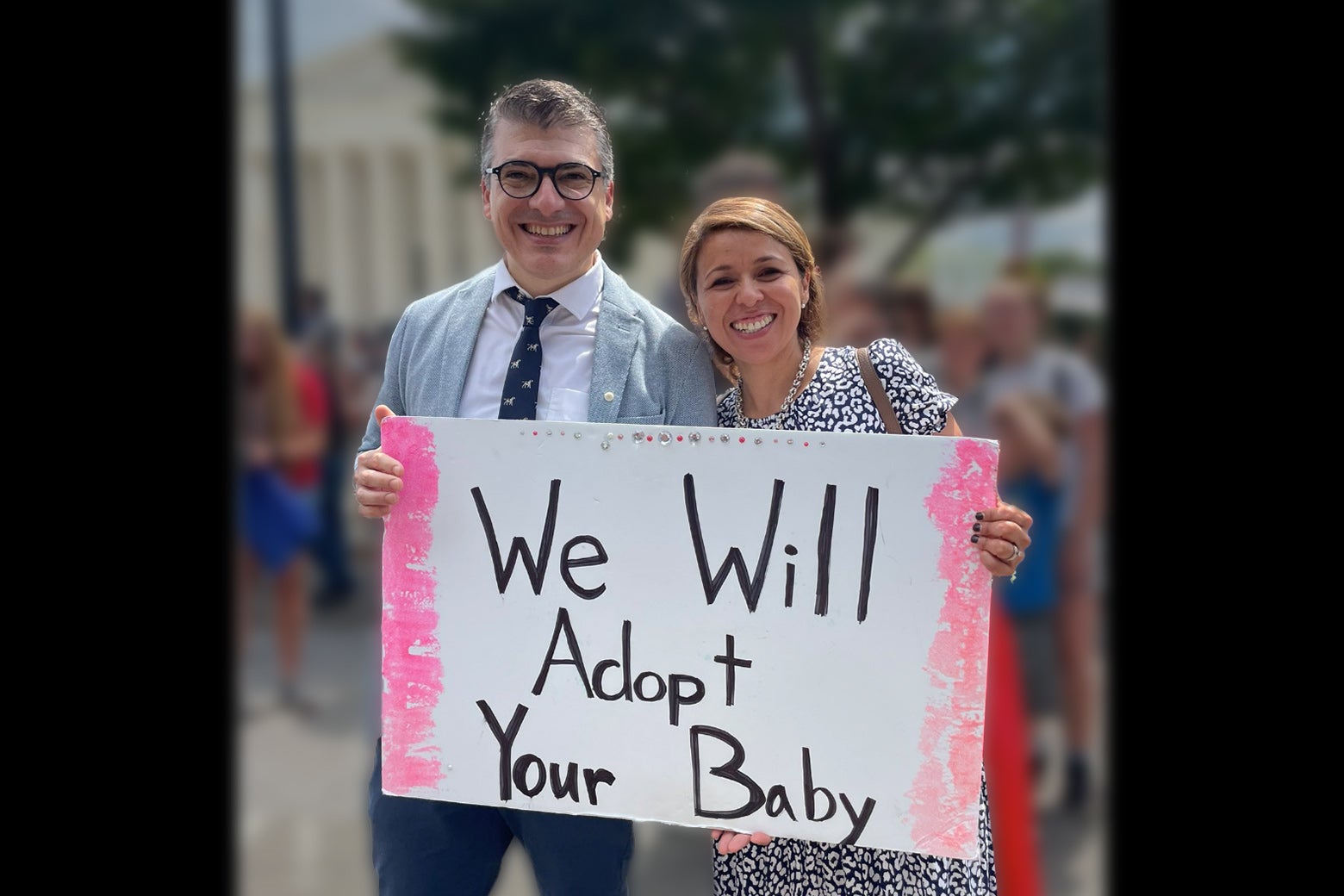
For example, people found this couple incredibly annoying. But if you are pro-choice, this is the least bad response in our pluralistic society.

If you want pluralism, you are going to have to live among people who disagree with your most deeply held beliefs about abortion. From there, you have three options. 
  1. Laws that make a decision about abortion for you, angering half the country.
  2. Social norms that try to shame and harass women who have or consider abortions.
  3. Social norms that promote adoption as an alternative to abortion.

Love them or hate them, the "we will adopt your baby" people are the best version of social norming. They are trying to model behavior they think is good to replace behavior they think is bad.

Conflict by Design

The other thing I've discovered is that some systems are designed for conflict and we just have to play the game. A good example is the way judges are appointed. During Trump's four years, Mitch McConnell’s Senate majority confirmed three right-wing justices and 234 new judges overall, a blistering pace. Not to be outdone, under Biden, Chuck Schumer, the Senate majority leader, has actually confirmed federal judges at a faster rate than McConnell’s at the time of the first midterm election.

If one person has the power to appoint judges who will carry our their will, the only way to respond is to take power and appoint your own partisan judges at the same rate. You can't point out that this is a mistake, you have to respond with conflict or you lose.

I am very pro bipartisanship. But I've come to believe that Obama's attempt to involve Republicans in the creation of the Affordable Care Act, in the name of bipartisanship, was a mistake. Republicans will not return the favor. They will pass partisan bills if they have the votes and will stymie any legislation put forth by Democrats to prevent them from getting a win.

So until we have a better system, like one with judicial term limits, you kinda have to play the prisoner's dilemma game by defecting until the other party decides to cooperate. 

Tuesday, November 15, 2022

Weighting Provokers

I recently had a conversation with a friend who was telling me about his frustration with information around the Covid vaccines. He told me about a journalist who had been banned from Twitter (was recently reinstated) for "telling the truth." Namely, reporting that nothing in the original Pfizer trials showed any impact on transmission. 

We've been lied to, he told me.

I asked where he heard this, even though I already knew the answer. And that answer was the Joe Rogan Podcast.

I spent several seconds Googling this claim and sent him a link from Reuters that provided some clarifcation. (Yes, to obtain emergency authorization from the FDA you do not need to prove transmission reduction, only that it's safe and reduces fatalities and hospitalizations. Also, later studies showed the vaccine did reduce transmission in Covid Classic, something the Rogan journalist did not report on.)

Yet despite all this, I still kinda like Joe Rogan. 

The whole conversation reaffirmed for me why I trust my views more than my friend's. By listening to Joe Rogan's podcast, my friend hears voices outside the mainstream that others may be missing. But by not listening to mainstream media, or even fact-checking the claims he hears, he's missing a lot of details that provide more clarity and is unable to build a good consensus of opinion.

I listen to the mainstream and the rogues, but I need to be more aware how I divvy up my attention. I am reminded of the blog post about explainers, illuminators, and provokers. Joe Rogan is a provoker. David Leonhardt or Derek Thompson are explainers. Noah Smith and Matt Iglesias are illuminators. And I think they are all important.

Bet on it

Let's say at the beginning of the 2021 NBA season, I wanted to bet on how many games I thought the Boston Celtics would win. If I listened to the mainstream consensus. I would have guessed that they would win about half their games, or 41.

But what if I had listened to a rogue prognosticator, who was convinced that the new head coach's defensive scheme and tough-love approach was going to shock people and that this team was going to win  65 games? 

Well, he would've been wrong, but he would have updated my priors more in his direction and probably moved my prediction from the consensus of 41 wins to something like 51, which is exactly how many games they won on their way to the NBA Finals that year.

But if I only listened to the provokers, I'd just hear extreme predictions like 65 wins or 12 wins, nothing tempered by the consensus that would actually get me closer to the true total of 51.

So I build my model similar to Nassim Taleb's barbell approach to investing: 80% in safe bonds and 20% in high-risk, high-reward stocks. The NYT reporters are the bonds, the Joe Rogan Podcast guests are the stocks. 

I used to think that intellectual diversity was more important but I think this framing is better. (Or maybe you meld the two and ensure there is intellectual diversity among your explainers and your provokers.) I also think there is a distinction, that some may say doesn't exist, between rogues and conflict entrepreneurs—the latter being people who lie or distort to create a narrative that affirms the priors of their audience and always frames the outgroup as the enemy. Whereas rogues take their contrarian position because it's what they really believe, no matter how unpopular it makes them.

I think my model is pretty good, and I will continue to update it as necessary, but I also understand that most people aren't building out a model when they choose where they get their news from. This is something that social media could take a more active approach with, building users' algorithms to reflect this model in their feed rather than it being an intellectual bubble. 

Monday, November 7, 2022

Updating my Priors: Short Takes 11.2022

Regarding my action vs. theory post: I thought this Inside Higher Ed article was a good melding of the two: teach activists to be builders. 

It also reminded me of this story from the Chronicle for Higher Ed. Student activists at Sarah Lawrence College interrupted speech with a list of demands. The writer, who was one of the speakers, recalls a conversation after the event with the president who reflected on how difficult it was to engage with these students. She had tried to get them involved in the budget process and be a part of the solution. 

Their response: "it isn’t our job. You figure it out." They didn't want to be builders.

Tanner Greer was right. Today’s activism isn’t “How can we solve this problem?” It’s “How can we get management to take our side?”


This paper finds that “greater access to firearms in the Black community reduced the rate of lynching in the Jim Crow South.” So maybe greater access to guns isn’t always a bad thing. Consider my priors updated.


I've always liked the argument that bad science shouldn't be fixed with censorship, it should be fixed with better science. But I never had a good example of what that would look like. 

Now I do. Jonathan Rauch fucking nails it.

In the early 20th century, the American Psychiatric Association's official stance on homosexuality was that it was a mental illness. Finally, in 1956 one psychologist tested whether psychiatrists could distinguish homosexuals from heterosexuals based on personality tests. They could not. By 1973 the APA reversed its stance.


Violet video games reduce violence:

So not only is the “video games cause school shootings” argument wrong, it actually does the opposite.


We know that millennials and Gen Z aren't able to afford homes because we haven't been building enough supply. But when we do build new homes, they aren't even they types that youngish people can afford Why?

I’ve noticed that new construction is always big houses, never any new starter homes. Now I know why.


Sunday, October 23, 2022

The Physical Pain of Grief


Sebastian Junger's essay "The Anthropology of Manhood" still resonates with me, particularly this part:

"a woman on a backhoe can move just as much earth as a man on a backhoe ... As these gender-specific jobs disappear, it becomes harder for men to know whether they have anything essential to offer society.

Both the triumph and the tragedy of modern society is that we have eliminated almost every hardship and danger from daily life. For the most part that is a great blessing, but it comes at a cost. The very efficiency of mass society makes people feel unnecessary, and therein lies a profound threat to our dignity."

Recently we had to put to sleep one of our family's dogs. He was about 13 years old, which means that he had been a part of our family longer than any of our children.

We decided on a home burial. Part of the decision was because we didn't like the idea of shoving his dead body into a giant oven to be incinerated with other dead animals. But the other reason was that it was really important for me to dig his hole in our backyard. And the fact that it was going to be a difficult and physically-demanding chore was part of the appeal, a notion I couldn't explain until I thought of the Junger essay.

It wasn't until some time after my son was born that I began to face the existential questions: What does it mean to be a man? A father?

After reading Junger's essay I've been reframing those questions as: What does it take to feel necessary?

I was the only member of our family who was physically capable of digging a four-foot deep hole with my spaded shovel. I was the only one physically capable of carrying my dog's body from the back of my car and lowering him into his final resting spot. Anyone could've handed him off to the vet tech, who could slide him into the incinerator and push a button. But for this task, I was necessary.

But it wasn't just about being needed by my family, it was about honoring my dog. And I wanted to feel the pain from digging his grave. I wanted my back to be sore the next day. I wanted those red blisters that formed on my calloused hands. I wanted to give our dog a respectful ceremony but I wanted to feel like it took something from me, a sacrifice in some way.

A decorated Christmas tree in your living room that was bought from the parking lot of a Home Depot looks the same as one you cut down with a hand saw from a tree farm out in the country. But something about the labor involved in procuring the latter tree makes it feel more valuable.

I now realize that that is how I chose to grieve; not through tears but through physical pain in a way that felt meaningful and necessary to the situation. 

That dog gave me over a decade's worth of joy. Even after his death he gave me another gift: he made me feel necessary.

Tuesday, September 13, 2022

EA Should Embrace Communitarianism


I.

I'm jumping on the "actually, effective altruism is bad" bandwagon. Even though I think it is mostly good. 

I identify as a communitarian, even when it comes to philanthropy. This puts me at odds with EA individuals but I think it actually fits with their philosophy.

In his book Moral Tribes, Joshua Greene talks a lot about utilitarianism, which he believes (and I agree) is the most misunderstood philosophy in the world. The greatest good for the greatest number, what could be wrong with that? The common argument against it is that, according to utilitarianism (which is at the heart of EA), if killing my mother and harvesting her organs will save seven lives then I must do it. If you find this scenario repulsive and reject it, then you must reject utilitarianism.

But wait, Greene says, if we all agree that this fictional society is worse, then that means we reject it on utilitarian grounds. In other words, we agree killing our mother to save the lives of seven strangers would not be for the greatest good. 

The problem with this interpretation of utilitarianism is that it only takes into account that which can be quantified. 

Yes, we can count that the loss of my mother's life resulted in the saving of seven other lives. But we cannot account for the grieving that my family and I experience. We cannot quantify the absolute horror everyone will be living in, knowing their life could be taken away by some utilitarians to provide for the greater good. It is this unquantifiable aspect of life that I am interested in.

II.

In Tribe, Sebastian Junger describes an asymmetry between the returning of hostages among early settlers and Native Americans. When the Native Americans released a colonist hostage, the colonists would sometimes refuse to return to their communities or even sneak out and go back to live with the Native Americans.  What's interesting isn't how often it happened, but that it happened at all. Because the reverse never occurred; released Native American hostages always rejoined their tribe.

By every quantifiable metric, living in civilization (as the colonists did) is better than living a hunter/gatherer life (as the Natives did); life expectancy, health care, literacy levels, rates of poverty, etc. 

Indeed, Scott Siskind notes a similar pattern with the Amish: "Relatively few Amish 'defect' to regular modern society." While they do beat other Americans in health outcomes, they lack the comforts of modern society. So there must be something about these lifestyles that causes people to prefer them to the "quantifiably better" lifestyle of modern civilization.

I call that "something" community.

III.

My case does not purely rest on anecdotes. We actually have some data. When you have strong social connections in your community, it makes you happier.

The effect of money on happiness has a low ceiling; after a certain point, making more money will not make you happier. But the social connections that come from being a part of a community will improve your life, which explains why a lonely life of material comfort can be less appealing than a materially-poor life with rich social connections.

One of the places people develop social connections through community is church. Indeed, this paper shows that:

"People living in an area with a higher density of co-religionists have higher incomes, they are less likely to be high school dropouts, and more likely to have a college degree. Living in such an area also reduces the odds of receiving welfare, decreases the odds of being divorced, and increases the odds of being married."

Not only that, social connections are a key, possibly the key, driver of social mobility. Raj Chetty's research shows that when poor children have friendships that cut across class lines, it increases their earning potential. There is significant variance in the number of cross-class friendships by community. In other words, the community you live in plays an outsized role in your life outcomes. So creating stronger communities will lift more people out of poverty and, probably, increase their happiness.

So while I understand that donating mosquito nets to people in Somalia will save more lives than any other donation I could make, I also believe that we don't fully grasp how much strengthening communities can improve our lives because it's harder to quantify. (I also believe that philanthropy that feels good for the donor will lead to more philanthropy, regardless of how EA-approved the charity is.)

IV.

A final thought regarding the Chetty research. The study showed that the effects of cross-class relationships are true regardless of race, the benefits of poor kids befriending rich kids aren't only extended to white kids. And the communities with large Black populations tend to be the most disconnected, with both black and white citizens having fewer high-income friends to help them rise out of poverty.

From this basis I propose my solution to reducing the racial wage gap: increasing the number of interracial friendships, specifically cross-class ones. And to take this a step further and do the binary Kendi good guy/bad guy thing: Any policy that reduces or sustains the number of black-white friendships is racist. Any policy that increases the number of black-white friendships is antiracist. 

That means DEI trainings that only cause white people to feel guilty, to walk on egg shells, or to look down upon poor white people, rather than strengthening interracial friendships, are racist. Yes, racist.

So let's tear down the walls that prevent us from having friendships outside our racial, social, and economic groups. And if you find a good charity doing this type of work, support them! If an effective altruist criticizes you, you just tell them that they are racist for not working to increase the number of interracial friendships.

Friday, August 26, 2022

Updating my Priors: Short Takes 8.2022

Oh, how I love when a big study comes along, gets published in the NYT with beautiful interactive graphics, and totally confirms all of my communitarian priors. The title says it all, "Vast New Study Shows a Key to Reducing Poverty: More Friendships Between Rich and Poor." This is my Maxwell's demon problem. I'll have more thoughts in a future post, but if there is an argument for MLK's Beloved Community, this is it.


Regarding my post about abortion being a losing issue for Republicans: their favorable/unfavorable rating has barely budged. However, their Senate odds in the mid terms has swung in their favor. It could be a lot of factors, but I think the Dobbs ruling definitely works against them. (Popularism ftw!) 


Regarding my comment about pessimistic people appearing smart

So not only does that bit of advice hold up in a study, the study also shows why we should ignore that advice: pessimistic people are less competent. Of course, I don't think the answer here is to ignore pessimistic people. I still think averaging the responses of experts—optimistic, pessimistic, and otherwise—is the best solution.


I just thought this was cool for some super 90s nostalgia.


In reading an essay, I came across the term “idea inoculation.” It reminded me of my post about the diffusion of rhetoric. This kind of explains my worry about activists controlling a message for The Persuadables and how they can actively do harm to a good cause.

In the essay—called Bioinfohazards by Megan Crawford, Finan Adamson, and Jeffrey Ladish—the writers contrast idea inoculation with the Streisand effect.

“In the case of the Streisand Effect, attempts to remove information are what catapult it into public consciousness. In the case of idea inoculation, attempts to publicize an idea ensure that the concept is ignored or dismissed out of hand, with no further consideration given to it."

A good example is the impact of pollution causing frogs to forgo intersex copulation in favor of intrasex copulation (ie it made the frogs gay), a phenomenon that took a while to catch on because it was being espoused by Alex Jones, he of little credibility. 

The essay's writers continue:

"Presenting a bad version of a good idea can cause people to dismiss it prematurely and not take it seriously, even when it’s presented in better form. 

Trying to change norms can backfire. If the first people presenting a measure to reduce the publication of risky research are too low prestige to be taken seriously, no effect might actually be the best-case scenario. An idea that is associated with disreputable people or hard-to-swallow arguments may itself start being treated as disreputable and face much higher skepticism and hostility than if better, proven arguments had been presented.”

This is tough because activists are the most action-oriented people, the first to promote a cause. So how do you get in front of the low-credibility ones to improve the messaging before they do more harm than good, when you're still bogged down in getting the theory right? I guess the answer is for popularists to become more activist-y.

For instance, red state Kansas defeated the anti-abortion ballot initiative by imbuing freedom into their message, with phrases like “strict government mandates” and “Say no to more government control.” It reminded me of a David Shor story about how the campaign ads that Democratic staffers liked best polled worse with the public. 

There is an interesting read about "respectability politics." Rosa Parks was hand picked to spark the bus boycott because "she’s morally clean, she’s reliable, nobody had nothing on her, she had the courage of her convictions." With MLK noting  “nobody can doubt the height of her character.”

Sadly, the person who delivers the message is more important than the actual message.


I found this fascinating:

School is literally killing our youth and yet I never hear any policy suggestions that will result in less school.