Friday, April 12, 2024

The Scam to Force Your Kids to Play More

Jonathan Haidt released his new book, The Anxious Generation, and it has been receiving a lot of attention. With this attention comes status, and as the Gossip Trap theory suggests, when a crab tries to status-climb his way out of the bucket, society responds by pulling him down with us.

The book attempts to show how smartphones are causing the decline in youth mental health.

I am partial to Haidt so I have trouble decoupling criticism of him from my admiration. So take what I write with a grain of salt.

Without digging too deep into the Nature critique of his work, my impression is that it’s trying to say that the evidence Haidt presents isn’t particularly strong. Others have suggested alternative causes and when Haidt or Jean Twenge respond they seem to do a good job of showing that the alternatives are always weaker than the smartphone theory.

So now we have the funnel problem. How do I know what is true when the process for truth-finding produces conflicting results?

This is where I have learned to throw everything aside and ask: What does common sense tell me?

Let’s go back to our priors, our base rates before we knew anything about smartphones.

The year is 2006. Everyone still owns flip phones and logs into Facebook from their laptop. A portal opens and someone from the year 2024 steps out. You ask him: What is the future like?
“Donald Trump becomes president. Then he loses reelection and tries to overthrow the government. Then he becomes indicted on 91 criminal charges. Then he gets reelected.”

“No, seriously,” you say.

“Well, Apple invents a phone that has the internet on it. Every teenager in America gets one and joins Facebook, Instagram, and TikTok.”

“What’s a TikTok?” you ask.

“Forget I said that. Just understand that kids flock to whatever new, cool social media platform that developers come up with.”

“Oh, just like they do with video games?”

“Sort of. Only the market share is much higher than video game users, like 95%. And they are on it all the time: when they are in bed, during class, while eating meals … always. Plus, the algorithms are designed to keep you on as long as possible and they heighten the most outrageous users with the most polarizing opinions. Teens spend less and less time meeting with one another face to face and more time using their phones.”
Now, knowing nothing more than this information—nothing about the coming recession, climate change worries, global conflicts, or any other coming disaster— would you predict that teen mental health would increase, decrease, or stay the same over the next 15 years?

Better yet: forget about smartphones for a minute. Imagine the time traveler shows you this chart. 

The number of hours a 12th grader spends with friends per week is 2.67, almost exactly what it was 25 years earlier in 1981. Then he tells you that in 2020 it will drop to 1.89, a 29% decrease. Do you expect there to be any second order effects from teens spending so much time alone in their bedrooms?

I get that some people require a high threshold for updating their priors but is it really that absurd to assume the second order effects of kids spending time reading comments on their Instagram feed instead of building a treehouse would have some negative consequences? And Haidt’s suggestions aren’t exactly draconian—no phones during school, age verification for social media to screen teens, more time for recess at school, etc.

Are we really worried that Haidt is in the pocket of Big Recess and wants to trick us into letting kids play more? It’s beginning to sound like this:


Friday, March 15, 2024

Privilege Paralysis

Scott Paul is the associate director of peace and security at Oxfam. Here is his view on Gaza aid:

Jeff Brooks is a fundraising writer. This is from a blog post he wrote titled “Worried about “donor as hero” fundraising?”
“One of the most common edits … relates to the perception of white saviourism. The idea that charitable donors are only helping people in a self-serving way reinforces patriarchal, colonial, and white supremacist attitudes and systems.”
A blogger who writes about school and race wrote a post about pandemic pods. She addresses the question "Would it be more socially just to invite families with fewer resources to join our pod?", saying, 
"This entire conversation is largely an exercise in privileged people trying to feel better about their own complicity in generations of inequality and injustice."
There is an idea behind these statements that I have seen enough to pique my curiosity. I am going to do my best to try and articulate this idea, which I’m calling Privilege Paralysis, and then do a little bit of speculating.

Privilege Paralysis starts like this. Imagine a person, we’ll call him James. James is a person of privilege: white, male, rich, married, inheritor of old money, etc. James feels guilty about his privilege. James decides to give some of his money to help disadvantaged people. Maybe he gives to UNICEF, or the ACLU, or his local food bank. It doesn’t matter where. What matters is that when he gives, it resolves his guilt.

The people who hold Privilege Paralysis DO NOT want his guilt to be resolved via this act of charity. If they are in a position to do so, they will take away his ability to make this donation that resolves his guilt.

So far, I am 90% confident that I have passed the ideological Turing Test. Now comes the speculating part.

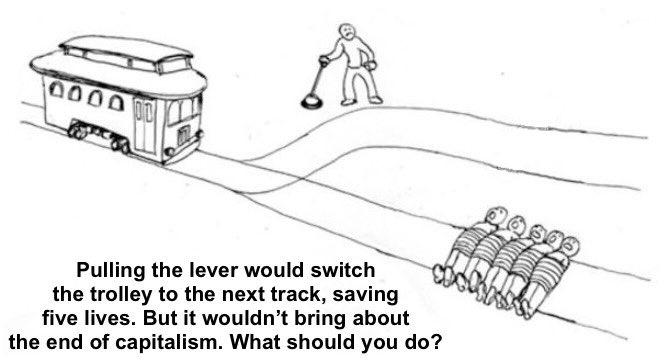
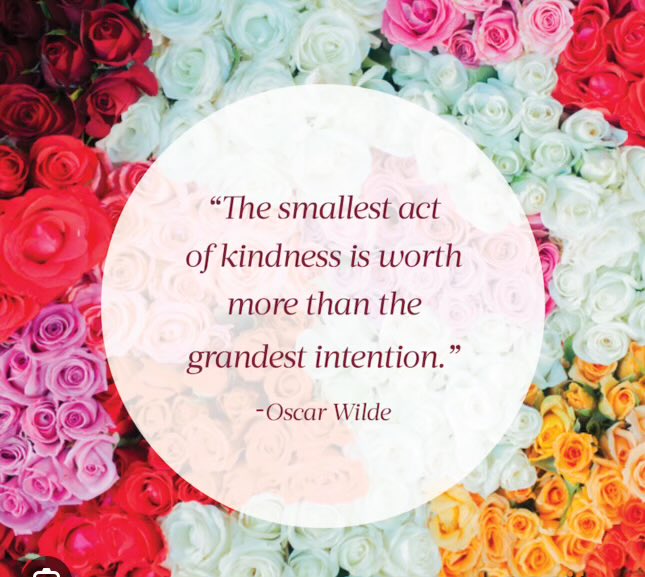
The reason the adherents of Privilege Paralysis do not want James to resolve his guilt via his donation is that they want him to hold onto his guilt. They believe that the way to solve the BIG PROBLEM that they care about (Capitalism, White Supremacy, Patriarchy, whatever) is not by small acts of kindness but by tearing down entire systems and building equitable ones in their place. Therefore, they need James and his guilt to help accomplish this. And the only way to do this is to get enough powerful people to feel that guilt and for it to propel them to tear down these systems.

Now I’m more like 65% confident that I am passing the Ideological Turing Test.

Jeff Brooks’ blog post, which I quote above, also tries to steelman Privilege Paralysis. He writes: 
“The idea is that donors unfairly get to feel good about helping those who are less fortunate than themselves. Because donors are part of and contribute to an unfair system — even if it’s unconsciously done. It’s this unfair system that keeps people in need in their disadvantaged state … But when we use these messages, we may be propping up a patriarchal, white, colonialist system.”
As someone who also works in fundraising, I am beginning to come across people who follow Privilege Paralysis. And while Brooks uses his blog post to try and find common ground, I am going to use this post to put my foot down. 

Because this is mission creep.

The people espousing this idea have lost the plot of their organization’s mission. Instead of helping people they are trying to solve a global problem with a solution that lacks consensus. And in the process of solving the global problem, they are denying care to the very people they are supposed to be helping.

Instead, their thinking looks like this:


And that’s fine if that’s what you want to do. But then leave your goddamn organization and start a new one because there are people who want to help those in need and your idealistic ass is getting in the way.

And when you start your anti-capitalist, anti-colonial, anti-racist organization to create your vision of utopia, don’t forget that every fringe ideology is trying to do the same thing and none of you are good at building anything. It always ends up looking like this:


Happy Friday, everyone!

Friday, February 23, 2024

Updating my Priors: Short Takes 2/2024

Center-left libs seem maddened by the fact that people think the economy is bad when their data says it is good. This thread takes a stab at explaining the disconnect by looking at how we are informed by "the vibes." In short, people care less about the unemployment rate than they once did. Now they care about home prices and interest rates.


George Carlin once had this bit where he proposed his plan for world peace. Once a year, for 24 non-stop hours, everyone in the world would be required to dance. Turns out that dancing is actually the single greatest cure for depression. Man was ahead of his time.


This chart was flying around X for a while. The political views of Gen Z differ wildly by gender. I like Paul Graham's hypothesis that youth isolation is causing asymmetric polarization.


In the past, I would've watched the video and rolled my eyes at this GenZer complaining about how work is hard. But after reading this explanation, I kinda think its right. I once left a job as a bank teller (somewhat high status) for a job mowing grass (low status), simply because I hated dealing with people all day long. I chose physical labor over emotional labor. Now, a much greater percentage of jobs require emotional rather than physical labor.


I wrote that there are no longer songs about duty and responsibility since those are silent generation values. I recently realized the second verse of the 1988 hit “Fast Car” is about precisely those values. The narrator is sacrificing her own desires to care for her father.


See, my old man's got a problem
He live with the bottle, that's the way it is
He says his body's too old for working
His body's too young to look like his

Mama went off and left him
She wanted more from life than he could give
I said, "Somebody's got to take care of him"
So, I quit school and that's what I did

Arthur Brooke states his rules for evaluating research. Seems like good advice.

  1. "If it seems too good to be true, it probably is.
  2. Let ideas age a bit.
  3. Useful beats clever.
So, in life as in work, when I see a bandwagon going by, I always ask, Does this seem too good to be true? I let the cultural moment or social trend age for a while. And then I consider whether it is useful, as opposed to simply novel."


Adam Grant says that in conspiracy theories has more to do with low trust than IQ.


I've been thinking again about one of my favorite SSC posts about the dichotomy of mistake theorists and conflict theorists. I wonder if the simplest explanation to distinguish the two views is that it all comes down to intention. When something bad happens, mistake theorists assuming well-intentioned people made a mistake, while conflict theorists assume people with bad intentions knowingly made the bad thing happen.

Based on Grants work, I would guess that mistake theorists have more trust than conflict theorists, the latter seem more prone to conspiracy beliefs.

Friday, January 5, 2024

Responsible to Someone

I saw a Facebook post recently. I didn’t know its author, but she tagged someone I am connected to—the father of one of my son’s friends. It was a post that publicly acknowledged their relationship; i.e. they were officially a couple. The missing context is that he—the father of my son’s friend, heretofore known as K—was married. So it was also indirectly the public acknowledgement of the end of K’s marriage.

I am reading a book that echoes a lot of Putnam’s findings in The Upswing, namely the shift among Americans from a communitarian ethos to an individualistic one. One of the book’s observations is that the old America used to have a concept of duty and responsibility that has since been replaced by individualism and something like "the search for happiness."

I am reminded of the movie Spanglish, in which Flor, a Mexican American* mother, and Adam Sandler’s character are falling in love. Sandler’s marriage is on the rocks; he is married to a selfish person, a bad mother, and a cheater. The movie ends with Flor resisting her feelings for Sandler and walking away. I think how you feel about her decision says a lot about who you are. She felt a commitment to the duties and responsibilities of not only her own family, but Sandler’s as well. A life with Sandler might have made the two of them happier, but her daughter would have to adjust to a new person in her life and he would be fighting for custody of his own kids. It would have been messy.

Now I don’t know the details of K’s situation, but his marriage seemed happy from the outside. I’m wondering if he simply found someone he fell in love with, and that love overpowered everything, including his marriage. You could even make the case that he felt a duty to love, and he was making the difficult but right decision.

Or you could say he was acting selfish.

There are a lot of reasons for the rising divorce rate. But a non-trivial contributing factor is that people used to have a sense of duty to family and marriage that trumped their own happiness.

In 1967, right as Putnam’s downswing toward individualism was turning, The Beatles released “All You Need is Love.” The theme was that all you need is love, and that love is all you need. Love is the most popular theme of pop music over the last 50 years. Here is a list of more than 100 songs with “love” in the title. Love was the central tenet of the hippie movement. Woodstock was “Three Days of Peace and Love.” How many songs are there about responsibility, family, duty, citizenship? Those are all old, silent generation values.

My grandfather worked in a hot, loud factory his whole life. It made him hard of hearing. He hated it but it allowed him to support his wife and four kids. As my dad, a baby boomer, was growing up there was an increase in professional creative jobs that only continued to grow with my generation.

This increase in various types of work meant that there was a good chance you could find something you really liked doing and didn’t have to settle for the soulless factory job like my grandfather who didn’t have many options. So I, like many of my peers, was told to “follow my passion.” Don't settle for any old job, you should be happy.

But that’s just another way of telling a child: “Your sole responsibility is to your own happiness. If a job isn’t making you happy, find one that will.”

For the Gen X, Kurt Coban types it was authenticity that replaced love. How can I live an authentic life?

For Older Millennials it was about meaning and purpose. How can I find a job that gives meaning to my life and is best suited to my unique skills?

For Zoomers it is “quality of life”— Is this raising or lowering my quality of life?

Notice the focus on the self—I, I, me.

And I’m not trying to do some Jordan Peterson, trad movement pitch here where I wag my finger at Zoomers and tell them to get married and start a family because that is the natural order of things. I just believe that everybody worships; but our default setting is to worship ourselves. The one thing the Silents and trads have right is that a duty to family, country, community or whatever takes the focus off of one’s self. And I think that is the way.

A lot of my posts sound like rants against social justice warriors and how they have it wrong, but the fact is that they are rightly guided by a sense of responsibility— to protecting the environment, to raising wages for minorities, or to ensuring their 401K does not invest in oil or anything Israel. The focus beyond the self.

The rationalist-affiliated website 80,000 hours has a unique framing for one’s career. Whatever you do, you’re going to do it for ~80,000 hours of your life. Therefore, you have a responsibility to choose the most effective way to spend those working hours. Not everyone needs to become a nurse and administer vaccines in third world countries; some people can spend their hours making a killing in investment banking and sending their bonuses to supply mosquito nets in Somalia. The idea is that you have a duty to spend your working hours in a way that best benefits society, not to enhance your quality of life. And if you try to do both you will probably fail at both.

But why do I still think there is a difference between the dad who volunteers to coach his daughter’s youth basketball team, among his many other responsibilities, because no other parent would do it, vs. the activists who chain themselves across a highway to protest the war in Gaza? Why is Martin Luther King Jr. idolized as the leader of the civil rights movement, but not Lyndon Johnson, the seasoned politician willing to make any deal to get the Civil Rights Act and Voting Rights Act passed? Why does the Sunrise Movement take credit for the passage of Biden’s climate bill when it was Chuck Schumer who worked non stop to get Manchin’s tie breaking vote? Conservatives praise the brave Christians who pray to end abortion and harass women entering Planned Parenthood clinics, but it was Mitch McConnell breaking congressional norms, and tolerating the least conservative Republican president of my lifetime, who stacked the court to ensure the end of Roe v. Wade.

Because in modern society there is a lack of opportunity for heroism. And politics is the long slow boring of hard boards, which precludes heroes. Politicians never get the social credit and valor for their achievements. Greta Thunberg is viewed as a hero among environmentalists, not Chuck Shumer.

And therein lies the true nature of duty—doing the right thing for others when no one is looking.


When it comes to discourse, I try to follow Eleanor Roosevelt’s advice: “Great minds discuss ideas; average minds discuss events; small minds discuss people.” But when it comes to responsibility, I go in the opposite direction. Rather than being responsible grand ideas, be responsible to actual people who know you. Be there for them. Show up. Be a hero for your daughter; not your TikTok followers.

*I only mention Flor's ethnicity because I think it was important to the movie, which contrasts the cultural norms of marriage in America vs. Mexico.

Lessons I hope my children learn


In 2018 I wrote a Jorden Peterson-esque "rules for life" post. I reread and think it is mostly good. But I have more kids since then and now I need a list of things that I hope my children learn, things that I found most helpful as I have navigated through life up until this point.

Beware of your false positive bias. We tend to see patterns that are not there and to attribute human agency and evil intentions to bad outcomes. But randomness is almost always the culprit. Resist the temptation to blame people for misfortunes and accept that bad stuff just happens.

Beware of your hero complex. We want to be well-regarded by our peers and within our community. This can lead us to want to be seen performing virtuous acts, which produces brave heroes. It also produces terrorists.

Favor the tried and true. We feel morally superior to the way things used to be and tend to view history through the present lens, which means our present will be viewed through someone’s future lens. Many current morals and beliefs that we think of as righteous today will shift in the future, so put your trust in those virtues that have withstood the test of time, like kindness, courage, honesty, compassion, temperance, and justice.

Reading a well-respected book written 100 years ago will give you a better understanding of the current world than staying on top of the daily news coverage.

Go golfing with your buddies. It’s not about golf. It’s about 5 uninterrupted hours of socializing, light exercise, sunlight exposure, and being in nature. You will feel recharged.

Learn to play guitar. Or drums. Or saxophone. Or landscape painting. Have some artistic hobby that you can always come back to and work on. Creating art is one of the most beautiful things a human can do, even if it’s just strumming a three-chord progression alone in your bedroom.

Volunteer in a homeless shelter. Envy is the most common human emotion. If you spend too much time around people more successful than you, you will come to feel like a failure. Spending time with people less fortunate than you will remind you how well-off you are.

Treasure the little moments. Life isn’t about the yearly beach vacations, getting a big Christmas bonus, or buying your dream car. It’s about making a baby smile, watching a sunset during an evening walk, the smell of pizza coming from a restaurant’s kitchen, or feeling a cool breeze blow across your face on a summer day. On their deathbed, no one looks back and wishes they had worked more. They think about the little moments.

Monday, October 2, 2023

Against Degrowtherism

Why the annoying climate activists and degrowthers are wrong


There is a phrase that goes like this: No food: one problem. Lots of food: lots of problems.

We live in a world in which we have solved the food problem. At least, we’ve gotten to a point where there are fewer people experiencing hunger than at any point in human history. (There is a controversial idea that hunter/gatherers had it better. If that were true, then update my last sentence to “at any point since the dawn of civilization.” But I don’t think it’s true.)

So we live in the second type of world: lots of food, lots of problems. And yet, my guess is that, given the choice, most people would prefer this world. We worry about climate change, AI risk, and nuclear war because we are not worrying about food. If we didn’t have food, those things wouldn’t be problems.

My problem with the “stop all drilling right now” people is that they don’t have a backup plan. And our lives are so dependent on oil, and becoming less so thanks to things like the IRA, that if we cut them out, its downstream effects will be so catastrophic that we will be living in the No Food, One Problem world, which, as I’ve mentioned, is worse.

So as bad as the effects of climate change are, I still think they are better than the degrowther world we would be living in. I think we should continue on the path of investing in renewable energy so that we can replace oil-powered products without sending our society into the stone age, where we’ll still be living with the effects of climate change plus we’ll be poor and hungry.

Friday, May 19, 2023

Updating my Priors: Short Takes 5/23

Two Matt Yglesias points reflect the Transparency Effect, the idea that things only seem to be getting worse because they are more transparent so we're just seeing more bad shit that was previously hidden. In fact, Steven Pinker might be right that things are actually better than ever.

"Officers were usually chosen based on political connections and bribery. There were no civil service exams or even formal training in most places. They were also used as a tool of political parties to suppress opposition voting and spy on and suppress workers’ organizations, meetings, and strikes. If a local businessman had close ties to a local politician, he needed only to go to the station and a squad of police would be sent to threaten, beat, and arrest workers as needed. Payments from gamblers and, later, bootleggers were a major source of income for officers, with payments increasing up the chain of command."
Second, newspapers used to be insanely corrupt.
“As Louis Menand explains in a recent review essay, back in “the good old days,” the press was often willfully deceptive and saw collaborating with government officials to mislead people as part of its job.”
And yet, both institutions are much less trusted than ever even though this level of corruption would seem unimaginable today!


Robin Hanson writes a post about why modernity seems so boring that seems to agree with the Gossip Trap theory.
“With friends, family, and close co-workers, we are around people that mostly want to like us, and know us rather well. Yes, they want us to conform too, but they apply this pressure in moderation.

Out in public, in contrast, we face bandits eager for chances to gain social credit by taking us down, often via accusing us of violating the sacred.”

“I see roughly three typical public stances: boring, lively, or outraged. Either you act boring, so the bandits will ignore you, you act lively, and invite bandit attacks, or you act outraged, and play a bandit yourself." 
The last part about acting boring was where I got my theory that Survivor is the best metaphor for how modern celebrities try to behave.


I saw a Tik Tok video of a young Gen Z woman saying something to the effect of “You don’t hate Mondays. You hate capitalism.” It reminded me of my post about how dialogue about conflict is usually an argument about aesthetics. For the Marxists and Marxist-adjacent, like the capitalism-hating woman in the Tik Tok video, the core of the belief might simply be that labor is ugly and society should be optimized around making the ugliness of labor as tolerable as possible.

I heard something similar on the Plain English podcast. Derek Thompson said that there is a group of people who believe that they cannot solve their own problem (eg depression) until they solve some society-wide problem (eg universal health care).


Not necessarily true, Neil. You might just have really good heuristics!


I made the case that higher education should stay away from public comments on the subject of morality, as it will hinder their credibility when it comes time to weigh in on topics of science. Now it looks like I have some evidence to back me up.


This article from The Atlantic shows that suicide rates went down during the pandemic. Confirms my priors based on the Sebastian Junger theory that tragic events that level hierarchies (ie the pandemic) can give a stronger sense of meaning and community. Plus, less school bullying. But I’m surprised it hasn’t been reported on until now, especially with all the other bad things that went up during the pandemic.


I thought this was interesting. My guess is that 40 years ago the bias would be in the opposite direction. I wonder how much the "boys are falling behind" narrative creates this bias, with teachers developing a prior that boys aren't as smart.


I once got into an online argument with someone regarding the topic of using shame as a method of persuasion. He referenced a study that showed shame worked for getting people to quit smoking, which I dismissed as that idea doesn't scale, i.e. it only works when used by family members. You can't shame some rando online into changing his mind about, say, systemic racism.

But I don't think I should have been as dismissive. If you can convince some non-trivial number of Republicans to, I dunno, support green energy initiatives, then their ability to shame their peers is more impactful than anything a Democrat could do.


This post by Lindy Man touches on a lot of the topics I wrote about here, even using the same references to Reality Bites and Fight Club to illustrate the non-conformity ethos of the ‘90s. But what I really want to draw attention to is the chart he cites from this Axios report.
People mean many things when they complain about “snowflakes.” But generally, I think they are talking about an increased sensitivity to emotional harm and favoring censorship as a remedy. A common thing you hear about regarding comedies, in what Lindy Man calls The Vulgar Wave (the period from 1990 to 2008) is that “you can’t make a movie like that anymore.” 

And maybe the Axios report offers the simplest explanation: women hold more cultural power than ever and their tastes are dictating art. This is a simpler answer than the Gossip Trap and so for now, I kinda have to favor it.

"A moral community seems like the one place where we can all agree that outsiders have no right to intrude. Just as Christians agree that Jews should be able to have their own temple to worship, woke NYT readers would have no problem with the National Review running the Tom Cotton piece. It's not that the column was wrongthink and harmful to minorities, it's where it appeared, in the sacred New York Times."
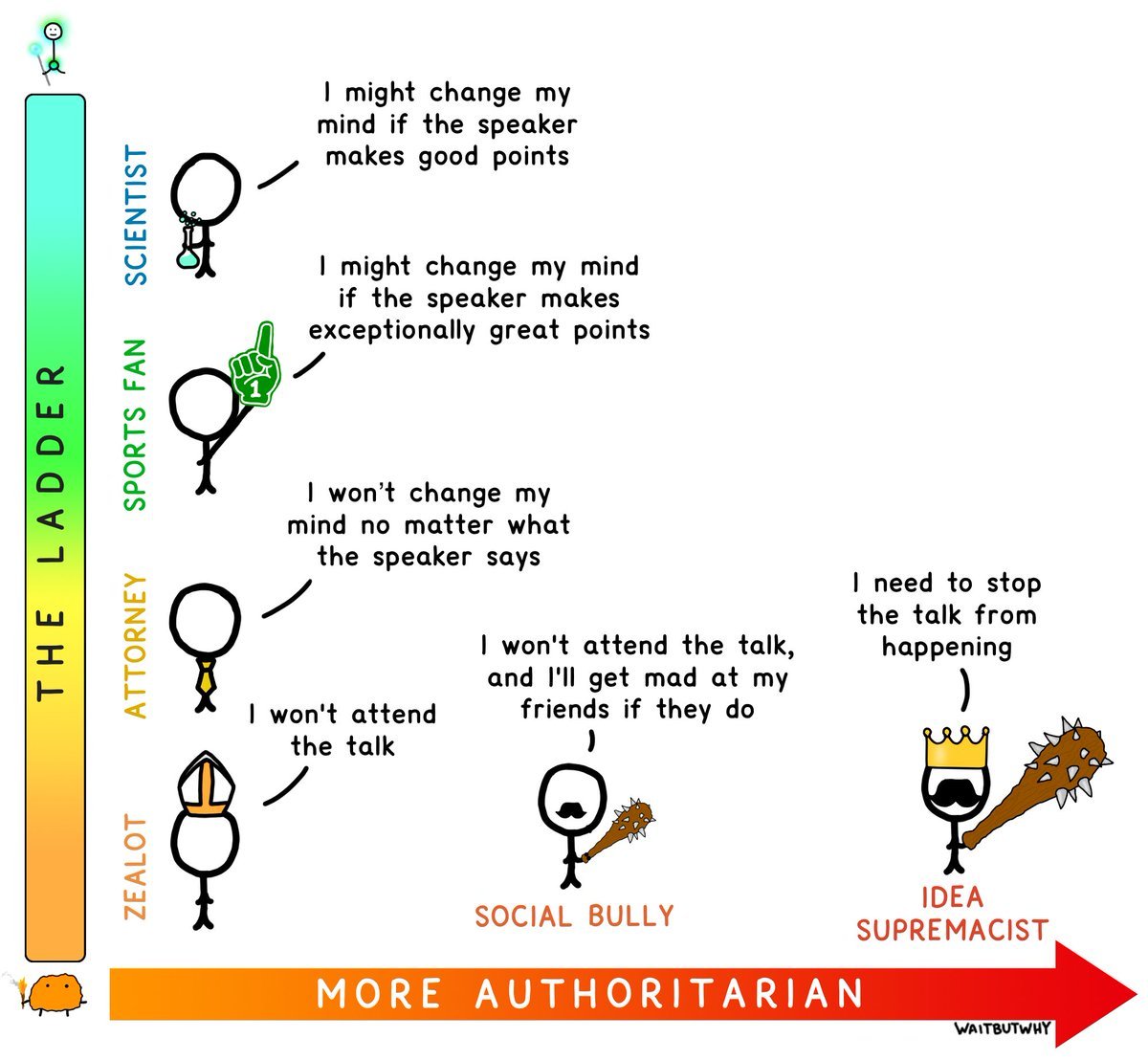
In recent news, Stanford Law School students shut down a speaker for his views. In the past, I've made the mistake of responding to this the same way as the following image. 


In other words, I viewed the students as Idea Supremacists, motivated to stop the talk from happening. But then I remembered that a lot of times in these campus situations, it ends not with the cancellation of the speech, but moving it off-site. 

This is important.

The next time you roll your eyes as some Gen Z student goes on about the need to create a safe space for vulnerable populations, try this experiment. Replace the word "safe" with "sacred."

This isn’t about censoring speech, it's about sacredness, the moral foundation of sanctity. These don’t students don’t want the speech to take place on their campus. Move it to a conservative church and watch the activists go home.  

And I don't blame the students. This is our fault as a society for failing to provide moral communities to people. 

It's like Derek Thompson's workism theory.
“work is not only necessary to economic production, but also the centerpiece of one’s identity and life’s purpose... 
In the past century, the American conception of work has shifted from jobs to careers to callings—from necessity to status to meaning.